
PUGLIA
Adriatic dolphins learn to scavenge from trawlers as fish stocks collapse
Baby dolphins copying parents' search for food signals ecological crisis in overfished Mediterranean
Francesca Lazzari415 wordsEdition №38Tuesday, 7 July 2026 — Edition № 38
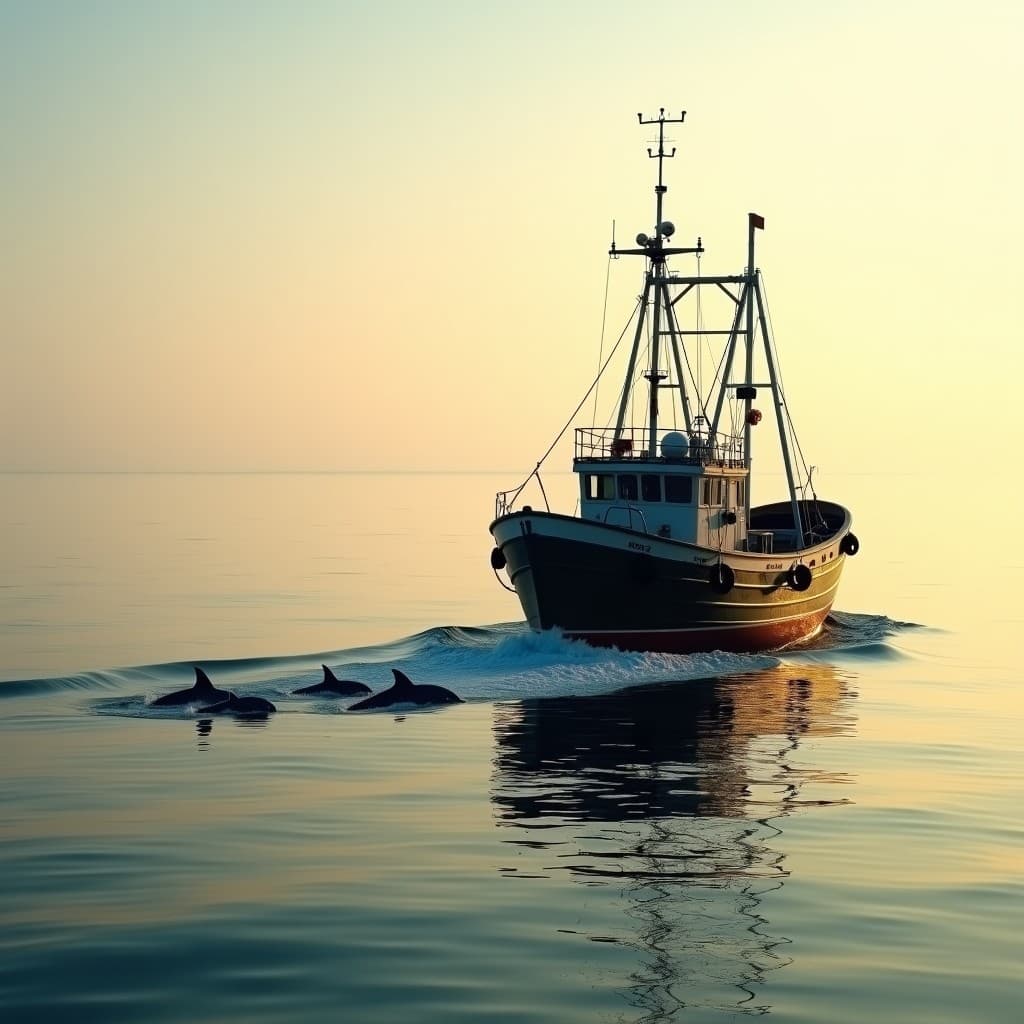
Bottlenose dolphins in the Adriatic Sea are now so dependent on trawlers for food that researchers say the easiest way to find them is to look for fishing boats. According to a study reported by the Guardian, in one area 76% of fishing boats were followed by dolphins, with baby dolphins learning the scavenging technique from their parents. The behaviour marks a stark shift in the marine food chain: dolphins that once hunted wild fish stocks are now trailing industrial vessels to eat discarded catch.
Giovanni Bearzi, a co-author of the research cited by the Guardian, underscored the severity of the finding. The dolphins' dependence on trawlers reflects what marine scientists describe as an overfished Adriatic—a region where industrial fishing has depleted wild stocks to the point where apex predators have abandoned natural hunting. The intergenerational transmission of the behaviour, with calves learning from mothers, suggests the adaptation is becoming embedded in dolphin populations.
For Puglia, the Adriatic is both livelihood and identity. The region's ports—Bari, Brindisi, Monopoli—depend on Adriatic fisheries, while tourism and cultural heritage rest on the sea's ecological health. The Guardian's report signals that the marine ecosystem Puglian fishing communities have worked for generations is in visible collapse. When dolphins must follow trawlers to survive, the foreign press is reporting, the fish stocks that sustain human fishing are no longer there.